The River of Ing
In previous weeks:
- the river transformed
- the river pulled
- the river flowed
- NOW: the river names.
It becomes part of how English names places, objects, identities, and purposes.
The Fourth Encounter
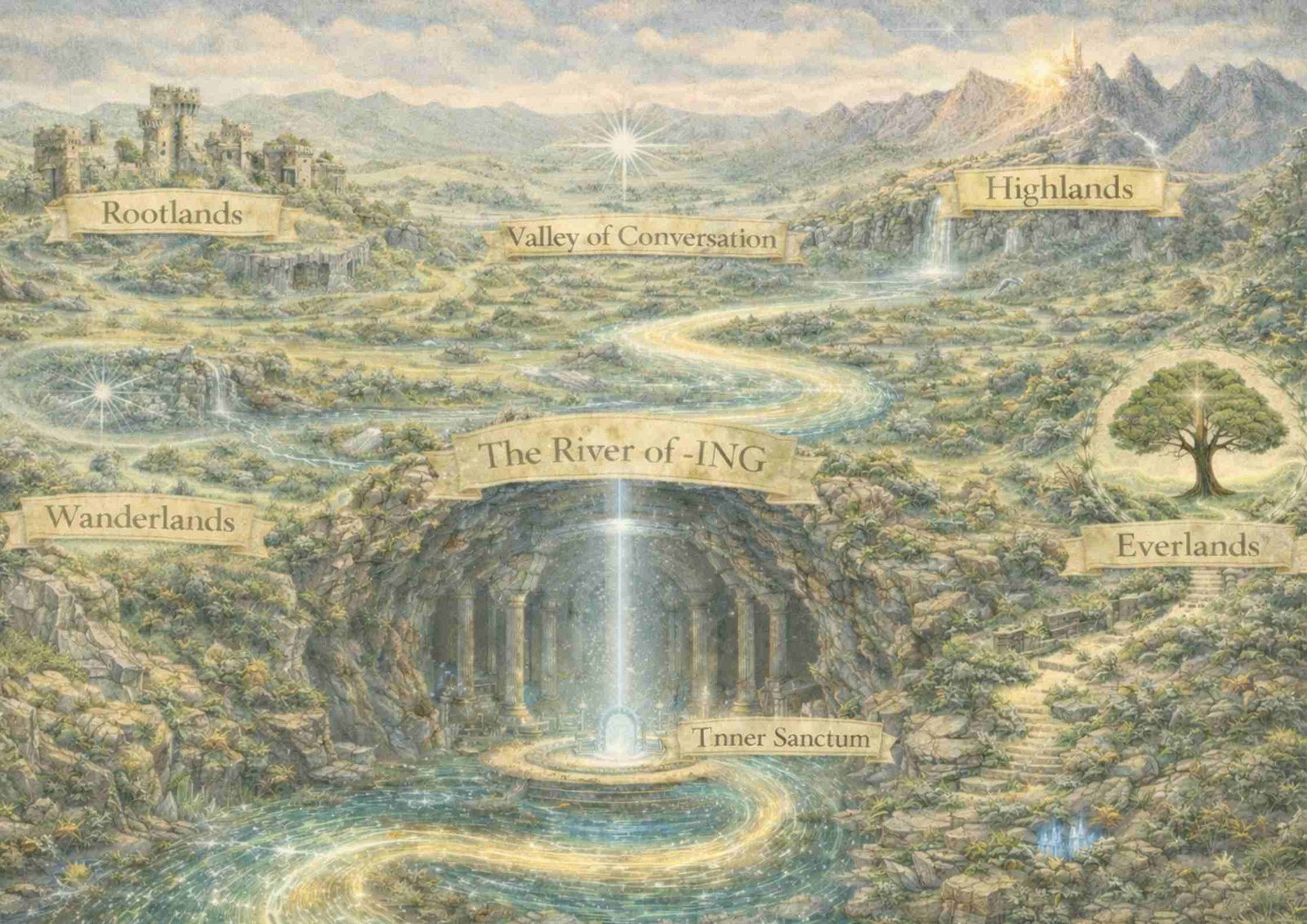
Remember that the student is seeing the River Ing everywhere.
This week he notices that the powers of the river can combine.
We already discovered that the Shapeshifting River can transform into a thing, quality or process.
In this ritual, we see these powers begin working together.
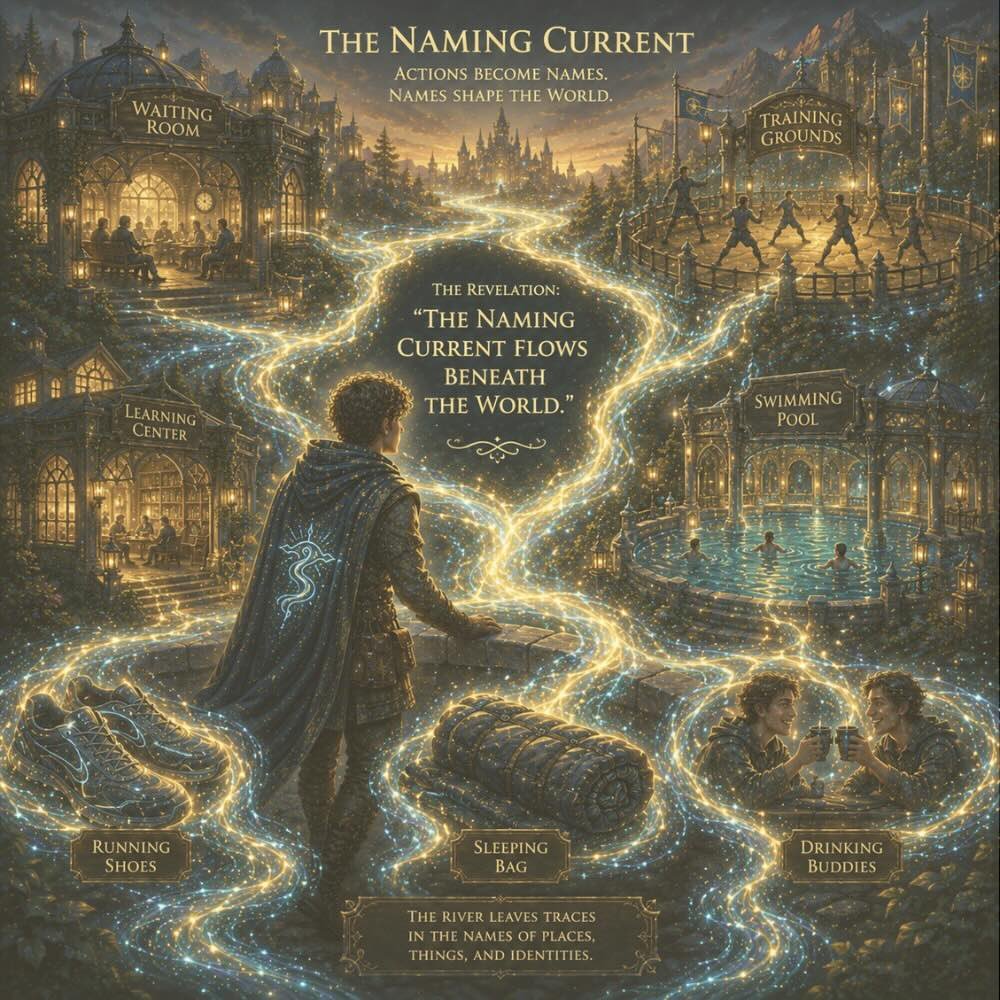
In English, actions don’t only happen…they become part of how the world is named.
Below are a whole load of things defined by a word ending in '-ing' as a quality or a process.
Examples:
Titles & Names of Places
- waiting room
- learning center
- swimming pool
- training ground
-ING as Compound Modifier
- running shoes
- sleeping bag
- drinking buddies

The Naming Current
The traveller walks through Grammaria and slowly realizes:
- the Waiting Rooms (Salas de Espera)
- the Training Grounds (Pistas (de entrenamiento)
- the Learning Centers (Centros de aprendizaje)
- the Running Shoes (Zapatillas para correr)
- the Sleeping Bags (Sacos de dormir)
all carry traces of the river.
The Naming Current flows beneath the world. The traveller discovers that the powers of the River Ing can overlap. An activity can become part of the identity of a place. The river marks purpose, function, or identity.
“The traveller now understands that the River of -ING is everywhere.”
Spanish Contrast:
Spanish often uses:
- para + infinitive
- de + noun
while English compresses into naming structures.
ING AS A THING (defined by a QUALITY or PROCESS)
→ Títulos y Nombres de Lugar
(Grammar + Exercise)
→ En nombres de lugares, salas y títulos, la forma -ing suele indicar la actividad asociada a ese lugar.
→ Gramaticalmente, estas formas -ing funcionan como modificadores del sustantivo, aunque conceptualmente están relacionadas con el gerundio.
→ Se entienden mejor como formas en -ING que funcionan de manera adjetival dentro de sintagmas nominales compuestos.
→ Técnicamente, son participios presentes usados de forma atributiva.
ING as a defining QUALITY or PROCESS
→ -ing como modificador de sustantivo en compuestos
(Grammar + Exercise)
→ Este es otro contexto donde la forma -ing se usa para modificar un sustantivo.
Aquí formamos sustantivos compuestos.
→ Indicamos el propósito, la función o el tipo de actividad asociada al sustantivo principal.
→ No nombra una acción en sí, sino que califica al sustantivo.
Aunque tiene forma verbal, aquí no se puede traducir literalmente como un verbo.
→ Diferencia con “-ing como título o nombre de lugar”
Ambas categorías usan la forma -ing como modificador de sustantivo con diferencias:
- -ing como modificador de sustantivo (8) - Describe qué tipo de cosa es / El foco está en el objeto o persona / El -ing no es el núcleo del significado
running shoes, drinking buddies, shopping bag
- -ing como título o nombre de lugar (4) - Nombra un espacio, institución o entidad / El foco está en la actividad como identidad / El -ing forma parte del nombre completo
- The Waiting Room, The Smoking Area, The Learning Center
🔁 Buenas Prácticas durante el Curso:
Consistency is more powerful than force — find a time to turn each unit into your English ritual, not a task.
La constancia es más poderosa que la fuerza — encuentra un momento para convertir cada unidad en tu ritual de inglés, no en una tarea.
Watch Your Video - There is some practice of the context seen in the previous ritual...
Download your summary sheets!
If you want to read in more depth about the different areas inside the 'Londinense Methodology', you can explore the website at your leisure. ↓